Two wool rugs can sit in the same home and receive completely different cleaning recommendations. Both are wool, yet their cleaning needs can be quite different.
At Feet Up Carpet Cleaning of Towson, the reasoning behind a cleaning recommendation starts with the rug itself. Its appearance provides useful clues, but the pile, construction, visible wear, and history of spot treatments tell a more complete story.
During a service visit to a Towson, MD home, our technicians assessed two wool rugs in different rooms. One was in a busy living room, and the other was in a guest bedroom that saw little activity. The comparison gave our team a practical example of how room use can influence cleaning needs and why professional rug cleaning should be assessed individually before recommending a deeper cleaning.
The first rug was positioned between a sofa and the main walkway in a family living room. Its muted pattern hid some of the dirt, yet the center looked flatter and darker than the edges. The owner vacuumed regularly, but the contrast remained.
During the inspection, our technician noticed a slightly gritty texture in the walking lanes. The pile appeared dull, and loose soil was still visible near the base of the fibers. The edges looked cleaner because people rarely stepped on them.
These observations suggested a familiar household pattern. Repeated foot traffic had pushed fine dirt deeper into the pile, leaving the walking lanes dull despite regular vacuuming.
The technician recommended considering a deeper cleaning after checking the rug's construction. The purpose was to remove accumulated soil that ordinary maintenance had not addressed.
The second rug was in a guest bedroom. Its surface had a light film of dust, but the pile remained reasonably clean. There were no pronounced traffic lanes, and the owner could not identify a persistent stain or recurring odor.
During the inspection, our technician examined the walking surface and compared it with the less exposed edges. The rug appeared consistent across most of its area. Its fibers showed no obvious signs of heavy soil, and there was no immediate reason to recommend a more intensive cleaning process.
Our technician recommended routine vacuuming as the appropriate next step. Any isolated mark could receive a separate assessment, with spot treatment selected according to the stain and the rug's dye stability.
A deeper cleaning would have brought limited additional benefit because the main concern was loose surface dust. The recommendation reflected the condition observed during the visit, not a preset cleaning interval or the assumption that every wool rug needed the same treatment.
| Inspection detail | Living-room rug | Guest-bedroom rug |
|---|---|---|
| Daily use | Frequent foot traffic | Limited use |
| Surface appearance | Dull center and darker walking lanes | Light dust across a generally consistent surface |
| Pile condition | Slightly gritty in busy areas | Reasonably clean |
| Likely concern | Soil lodged among the fibers | Loose surface dust |
| Recommended next step | Assess suitability for deeper cleaning | Continue routine maintenance and inspect isolated marks |
| Main caution | Confirm dye stability and fiber condition | Avoid unnecessary intensive treatment |
The two recommendations differed because the evidence differed. Our technician explained the reasoning behind each decision in terms the homeowner could verify by looking at the rugs.
Our approach follows the broader inspection principles described in the ANSI/IICRC S100 Standard for Professional Cleaning of Textile Floor Coverings. The standard addresses rug and carpet construction, soil removal, cleaning chemistry, inspection, and area-rug care.
Four checks are particularly useful when evaluating a wool rug.
These checks help prevent a common mistake: treating every visible mark as evidence that the whole rug needs a deeper clean. A single stain can need targeted attention, and a faded walking lane may reflect permanent wear rather than removable dirt. For a closer look at the signs that may call for a more intensive cleaning, read our guide, Is It Time to Deep Clean Your Wool Rug?
The technician explains the observed condition and the proposed next step before cleaning begins. If inspection reveals significant structural damage, the safest recommendation may involve specialist rug care or further assessment.

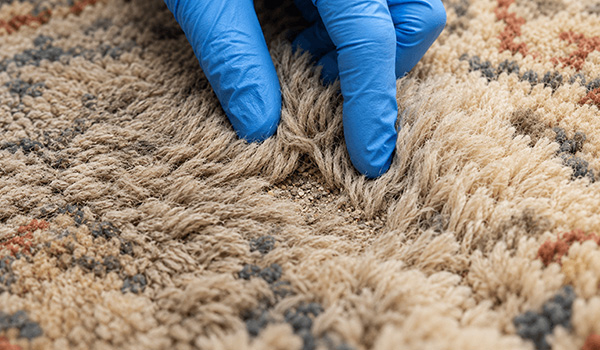

Wool has natural properties that make cleaning decisions more complicated than removing a surface stain. Its fibers can respond poorly to unsuitable chemistry, excessive moisture, or aggressive mechanical action. A method that works on a synthetic rug may pose risks for a delicate wool piece.
Dye stability, backing, and fringe condition are important considerations before cleaning a wool rug. Some rugs have dyes that respond poorly to shampooing. A preliminary colorfastness test can help identify risk, although the appropriate test and cleaning method depend on the particular rug.
Cleaning chemistry deserves equal attention. WoolSafe's product testing criteria address alkalinity and other characteristics that can affect wool and wool-rich textiles. Unsuitable products may damage fiber surfaces or contribute to color bleeding. A technician must select products and methods suited to the material, then control moisture and agitation carefully.
Professional judgment includes knowing when to recommend less work. A deeper clean is not automatically a better result, and a responsible recommendation should account for potential risks alongside the expected benefit.
The location of a rug can tell you a great deal about its cleaning needs. Towson homeowners can use a few practical observations to decide if a professional assessment would be useful:
Routine maintenance remains important even for rugs that appear clean. We recommend regular and thorough vacuuming to limit soil accumulation on fine-fiber rugs. The appropriate schedule depends on household activity, and busy areas generally need more frequent attention than lightly used rooms.
Homeowners should avoid experimenting with strong household cleaners on wool. A product that removes a mark from another surface may affect the rug's dyes or fibers. For valuable, delicate, or unfamiliar pieces, a professional assessment is a safer starting point.

At Feet Up Carpet Cleaning of Towson, a useful cleaning recommendation starts with the condition of the rug, not a blanket rule for every wool surface. One piece may benefit from a deeper cleaning, and another may need little more than continued maintenance.
If your wool rug has developed dull walking lanes, persistent soil, or a stain that resists routine care, contact us at 443-608-5358 to discuss its condition and appropriate cleaning options. We can also provide a free estimate to help you determine the next steps for your rug.
There is no universal schedule that suits every wool rug. Foot traffic, soil levels, fiber condition, and previous care help determine the appropriate interval.
Yes. Patterns and darker colors can conceal particles lodged among the fibers. A technician can compare high-traffic areas with less-used sections to assess the condition more accurately.
Cleaning can remove removable soil, but it cannot restore color lost through sunlight exposure or repair fibers worn down by foot traffic. Inspection helps distinguish soiling from permanent changes.
Routine vacuuming is suitable for regular maintenance. Professional help is advisable for heavily soiled rugs, persistent stains, delicate construction, or concerns about dye stability.


